OpenAI Suddenly Announces 'All-in-One': Browser + Programming + ChatGPT Merge, Internally Admits Mistakes Over the Past Year
OpenAI Suddenly Announces 'All-in-One': Browser + Programming + ChatGPT Merge, Internally Admits Mistakes Over the Past Year
On the night of March 19, 2026, an internal memo leaked from OpenAI headquarters, with the Wall Street Journal obtaining the original text first. The sender was OpenAI's application business CEO Fidji Simo—the former head of Instacart, who had just officially taken office less than a year ago in August last year—and the recipient was the entire company.
The core message of the letter was just one sentence: We have taken the wrong path before, and now we need to change.
How exactly will they change? By merging three desktop products—AI conversation application ChatGPT, AI programming platform Codex, and self-developed browser Atlas—into a unified desktop super application. OpenAI President Greg Brockman personally oversees the product integration, with Simo responsible for leading sales and promotion.
This is not an ordinary product update announcement.
Over the past year, OpenAI's product release pace has been dizzying: video generation tool Sora, AI programming platform Codex, self-developed browser Atlas, e-commerce features, hardware devices... CEO Sam Altman even internally compared the company's expansion strategy to "betting on a series of startups." This was a public declaration of OpenAI's expansion philosophy.
Now, Simo has systematically overturned this logic in the memo.
The most critical judgment is: When products like Codex start to work, spreading resources is the most dangerous thing.
1. "We have spread ourselves too thin": What signals did OpenAI send internally
Simo wrote in an internal note to employees: "We realize that we have spread our efforts across too many applications and technology stacks, and we must simplify. This fragmentation has been slowing us down and making it difficult to achieve the quality standards we desire."
The weight of this statement is akin to a public apology.
Looking back at 2025, OpenAI's product strategy was a typical "broad net" approach: new products launched every few weeks, each with its own dedicated R&D team, each requiring independent infrastructure. On the surface, this is a sign of rapid expansion for a tech company; in reality, it has led to a systemic problem—no product could concentrate enough resources to truly excel.
OpenAI's senior management, including CEO Sam Altman and Chief Research Officer Mark Chen, have recently conducted a systematic review of the company's product portfolio, evaluating priorities item by item. In an internal all-hands meeting, Simo issued a rare warning: the company can no longer be distracted by "side paths."
Notably, Simo chose the timing of the integration carefully. The Codex AI programming assistant currently has over 1.6 million weekly active users, and its user base has tripled since the beginning of 2026. This number is the core basis for OpenAI's decision to "bet"—not because all products succeeded, but because one product has shown real explosive potential, and the others should make way for it.
This is a more mature business judgment: identify which bet has won, and then push all chips in.
2. What does the Superapp look like: How the three product lines will merge
According to currently disclosed information, this super application will integrate three distinctly different product lines:
ChatGPT—OpenAI's core conversational AI, currently has over 900 million weekly active users, making it the largest AI entry point in the consumer sector, just one step away from 1 billion users;
Codex—an AI-native programming platform that supports independently completing complex programming tasks, is OpenAI's most strategically significant new product in the past six months and a major selling point in the enterprise customer market;
Atlas—OpenAI's self-developed AI browser, designed to allow AI to perceive and operate directly on web pages, is a key infrastructure for the future "Agent execution layer."
After the three are merged, the company is also developing a set of "agent tools" that allow AI to freely schedule between these three products—writing code, calling the browser, controlling the desktop, all tasks completed within one interface. This is where the true imaginative space of the super application lies: not a simple overlay of three tools, but a closed-loop AI workstation that can perceive, plan, and execute.Before the formal implementation of the merger plan, OpenAI will first focus on enhancing the productivity features of Codex, and then gradually integrate ChatGPT and the Atlas browser. The mobile ChatGPT application will not be affected for the time being and will continue to operate as an independent product.
In other words, this integration will be phased—Codex is the core framework, and the other products will attach sequentially.
This technical path itself reveals a strategic priority: OpenAI believes that the future competitive battleground lies in the enterprise and developer sectors, rather than the consumer sector.
Three, "Code Red": How Anthropic Has Pushed OpenAI to This Point
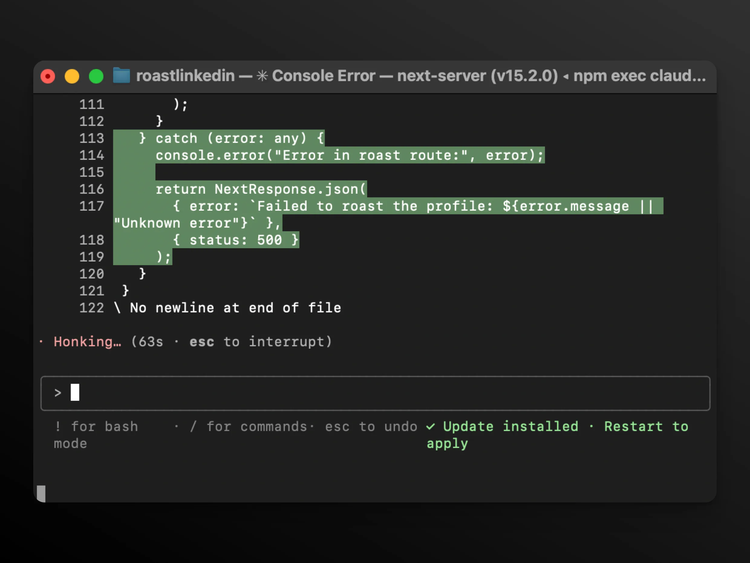
If we only look at OpenAI's internal memos, this merger seems to be just a normal product integration. But widening the perspective reveals the real trigger: Anthropic.
According to insiders, the rapid penetration of Anthropic's Claude Code within the developer community has put OpenAI in a "Code Red" (high alert) state. This term, in the internal culture of tech companies, usually means: we are losing a war we thought we would win easily.
The background of this strategic shift is Anthropic's significant progress in the enterprise customer market. With products like Claude Code and Cowork, Anthropic has quickly accumulated market share among developers and enterprise users, which is precisely the territory OpenAI wants to defend.
This point is worth pondering. Just two years ago, Anthropic was seen as a "small company that split from OpenAI and survived under the banner of safety." Now, it is significant enough for OpenAI executives to publicly warn employees in all-hands meetings: Anthropic is rapidly capturing the market, and we cannot be distracted.
Both companies are considering an IPO within this year and are under immense pressure to meet ambitious revenue targets. This means that this war is not just on a technical level; there is also a logic of capital markets driving it—whoever can prove their dominance in the enterprise market first will secure a higher valuation at the time of listing.
For OpenAI, the super application is both a defensive move and an offensive strategy.
Four, Greg Brockman Is Back, What Is He Doing This Time?
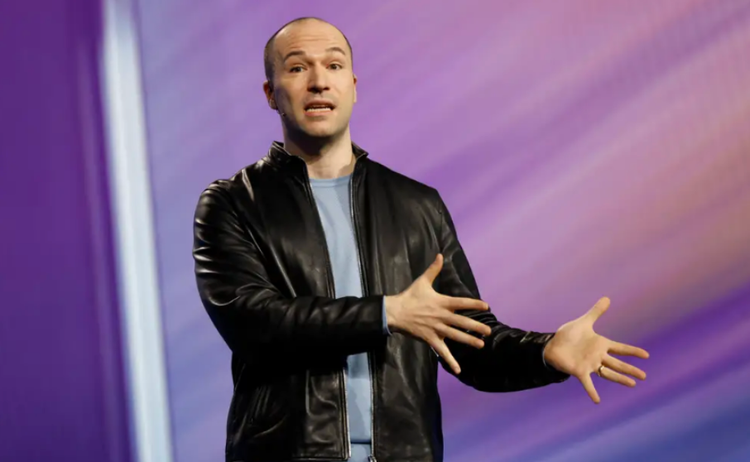
In this merger, one detail that is easy to overlook is that OpenAI President Greg Brockman will temporarily lead this product integration and related organizational adjustments.
Brockman is one of the co-founders of OpenAI, with a technical background, and has long been responsible for computational infrastructure. He took a brief leave last year but returned, although the specifics of his role within the company have remained unclear. His personal temporary oversight of the product restructuring for the super application indicates that he has been pushed to the most critical product battlefield.
This also reflects a subtle shift in the internal power dynamics of OpenAI: the level of product integration has risen high enough to require the involvement of a co-founder.
At the same time, Simo's role is also very clear—coming from consumer internet, her experience at Instacart makes her adept at sales strategies and market tactics. Simo will be responsible for the market sales of new products, focusing on customer expansion for productivity-driven tools. One manages product reconstruction, while the other manages commercial implementation, with clear division of labor.
This combination itself hints at OpenAI's positioning of the super application: not just a technical product, but a strategic weapon that must quickly monetize commercially.
Five, "From 100 Small Bets to One Big Bet": A Fundamental Shift in OpenAI's Strategic View
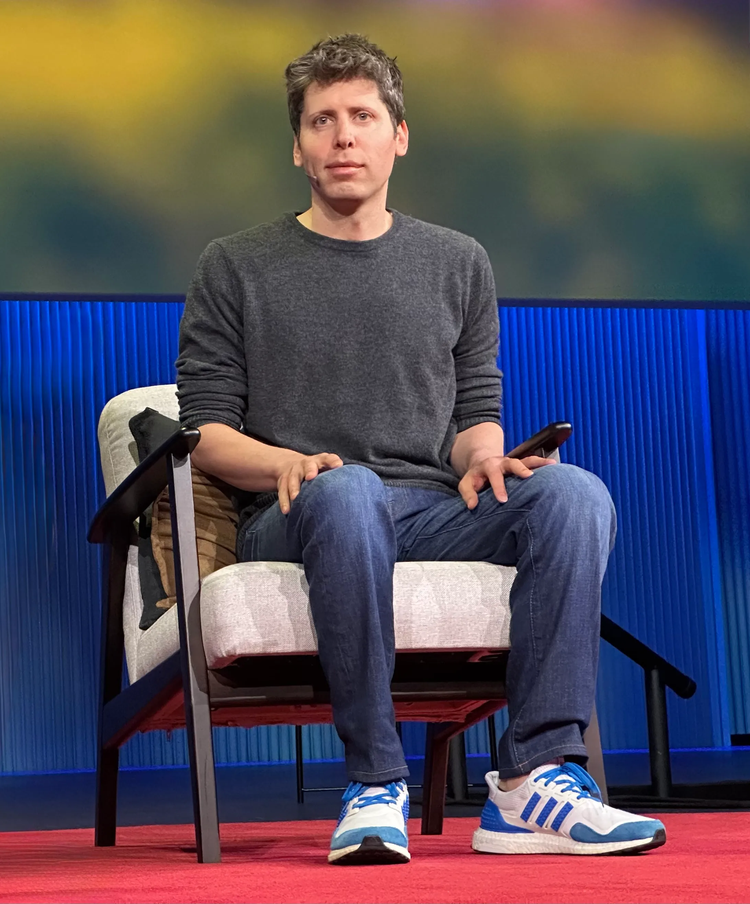
To understand this integration, we need to return to Sam Altman's strategic logic over the past year.
Altman has publicly compared OpenAI's expansion to "betting on a series of startups"—each new product is an independent small bet, with success leading to increased investment and failure resulting in abandonment. This is a typical transplant of VC thinking into product strategy: using diversity to hedge against uncertainty and trading speed for future options.During this period, OpenAI successively launched the Sora video generation tool and acquired the AI hardware company founded by former Apple Chief Design Officer Jony Ive. The breadth of its product line and the speed of its expansion led outsiders to believe that OpenAI was replicating Google's "money-splashing experiment" expansion path.
However, at the beginning of 2026, this logic began to falter.
The issue was not that a particular product failed—but rather that when Codex demonstrated real explosive potential, the dispersed resources could not quickly concentrate on it. This is the inherent flaw of the "broad net" strategy: it is suitable for the exploration phase but not for the decisive battle phase.
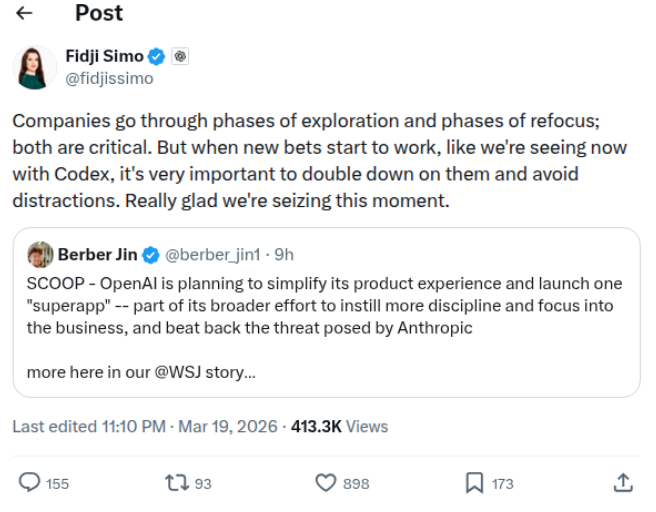
Simo publicly confirmed the news on X, stating: "The company will go through an exploration phase and a focus phase, both of which are crucial. But when new bets start to pay off—like we are seeing with Codex—it's very important to double down and avoid distractions. We are seizing this opportunity."
This statement represents a public iteration of OpenAI's strategic view: from "betting on multiple" to "betting on the strongest one."
Is Microsoft's Over $13 Billion Investment Now Awkward?
There is a question that has not been directly addressed by any party, yet almost all analysts have noticed: Where are the boundaries between OpenAI building its own browser, creating a desktop super application, and Microsoft's interests?
Microsoft's cumulative investment in OpenAI has exceeded $13 billion, and under their agreement, Microsoft has gained extensive commercial application rights to OpenAI's technology. However, no one clearly knows the specific terms of the agreement: If OpenAI directly creates a super application that can be independently deployed on users' desktops, will this bypass Microsoft's distribution channels and even directly compete with Microsoft's products?
Currently, neither party has commented on this. But this unresolved question will become increasingly unavoidable as the super application gradually materializes. Once OpenAI's desktop super application occupies the entry point of users' workflows, its relationship with Microsoft's Office, Edge, and Copilot will shift from "partners" to—at least in some sense—competitors.
This may be the real landmine in this super application strategy.
Final Thoughts
This announcement took only the time of an internal memo, but it points to a deep restructuring of the AI industry landscape.
For investors, this is a signal: the competition in the AI race has shifted from "which model is stronger" to "which product is more focused"—a fragmented product matrix is no longer a plus.
For developers, this means that OpenAI's next main battlefield will be the competition for your workspace—programming, browsing, and AI collaboration will all be integrated into the same interface, making it increasingly difficult for you to escape this ecosystem.
For Anthropic, this is a top-tier "recognition of competition"—when competitors begin to adjust their strategies specifically targeting you, your product logic has already received market validation from the side.
Simo's statement is worth rereading: "When new bets start to pay off, double down and avoid distractions." This is a principle that applies to everyone. The only question is—do you have enough courage to place the right bet at the right time?